Wilberforces at “Wintersparks”, FACT, Liverpool, 2012

Wilberforces at “Wintersparks”, FACT, Liverpool, 2012

Wilberforces at Winter Sparks, FACT, Liverpool
From Dec 13, 2012 until  February 24, 2013

Opening times:
Weekdays and Sunday: 12pm – 6pm
Saturday:                        11am – 6pm

Participants:
Edwin van der Heide Evolving Spark Network
Alexandre Burton      Impacts
Bosch & Simons         Wilberforces
Daksha Patel              Diffusion

FACT (Foundation for Art and Creative Technology)

88 Wood Street
Liverpool,  L1 4DQ
+44(0)151 707 4464

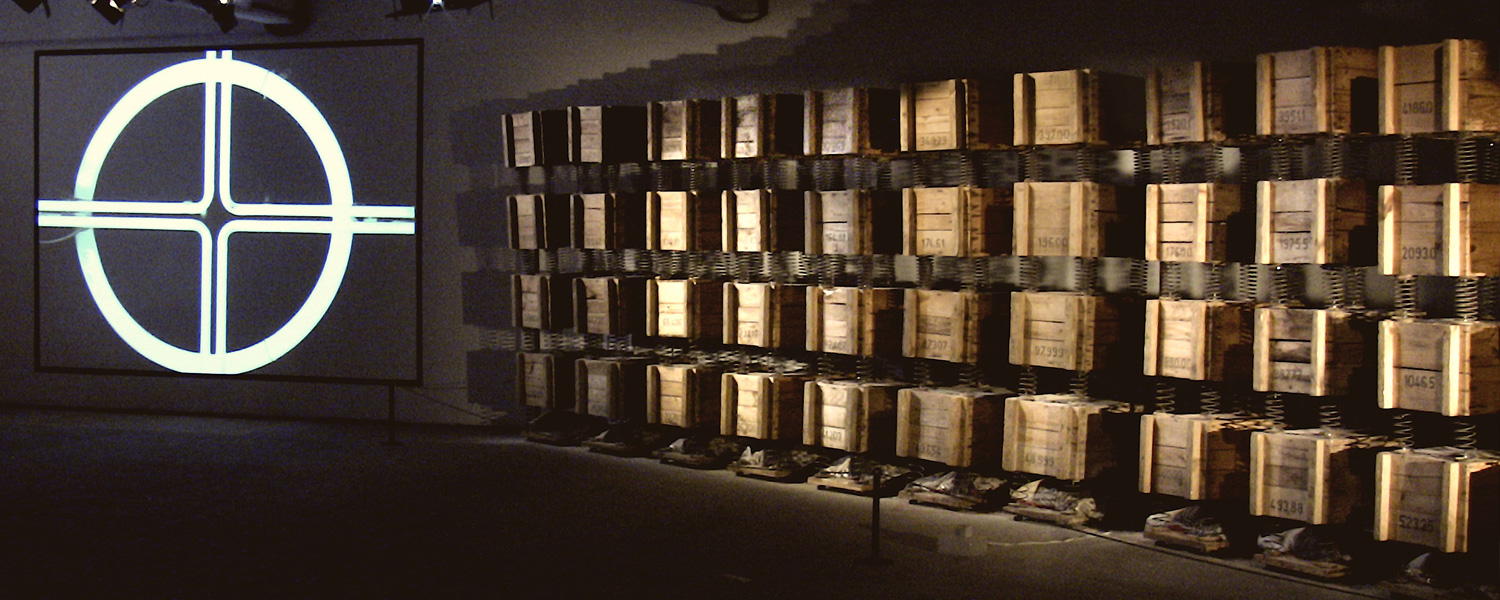
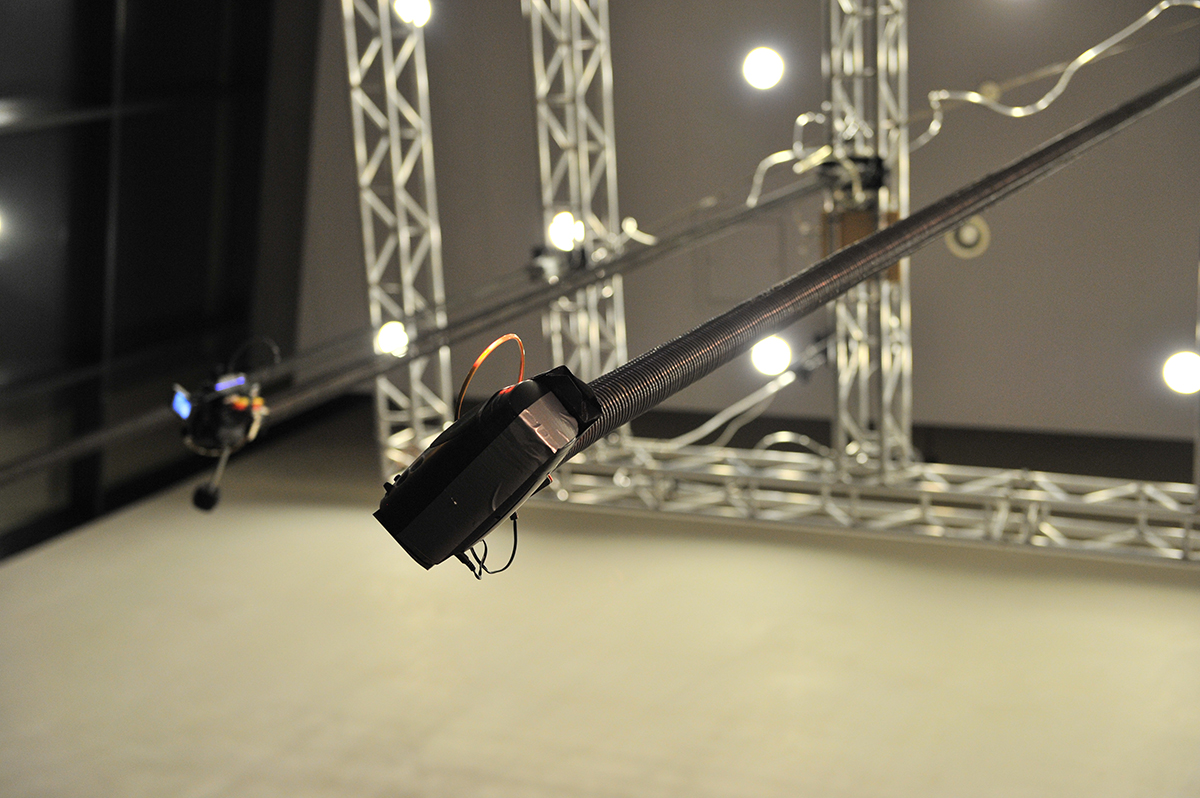
Wilberforces is a new work within our long series of vibratory projects. The title refers directly to a phenomenon from science, the Wilberforce Pendulum. This pendulum is nothing more than a hung metal spring with below it a central weight plus eccentric weights for calibration. The secret of the system lies in conceiving a calibration in such a way that the resonant frequencies of vertical movement and rotation of a spring are so near to each other that once set in motion its movement can change gradually from vertical motion into rotation and vice-versa without adding energy from an external source. It is an example of a coupled mechanical oscillator, often used as a demonstration in physics education.

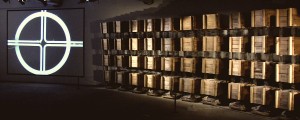
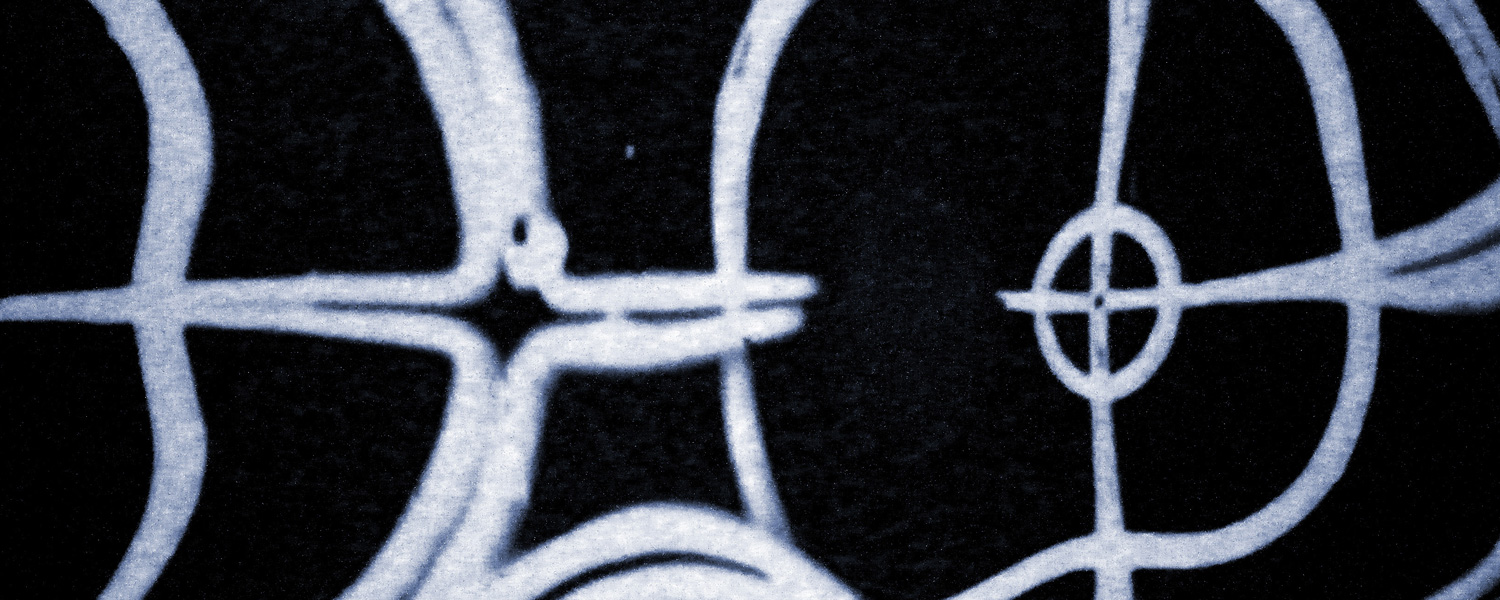
In Wilberforces three long springs are used for generating video and audio data. The springs have a length of around six meters, a size normally not found in physics laboratories and resulting in spectacular large and slow movements. Each spring is hung from above and attached to a pneumatic actuator that sporadically adds energy to the system. Below one of the springs hangs a video camera and microphone, below the other two hang tiny loudspeakers. Signals from the moving camera, mike and speakers provide the basic material for the sound and images produced by the work, obviously influenced by everything occurring in and around the FACT Atrium. The irregular motion of the springs can be tracked and experienced through a real time projection of further processed sound and image within a purpose-built dark space at the rear of the building.

Read more at http://www.fact.co.uk/projects/winter-sparks/bosch-simons-wilberforces/

This first version of Wilberforces has been produced by FACT (Foundation for Art and Creative Technology). The preliminary research for the project was made possible with a grant of Fundación Arte y Derecho/VEGAP, Madrid.

Acknowledgements: Günter Geiger (software development) and Peter Van der Hoogt  (scientific research)
Cantan un Huevo (2000-2001)

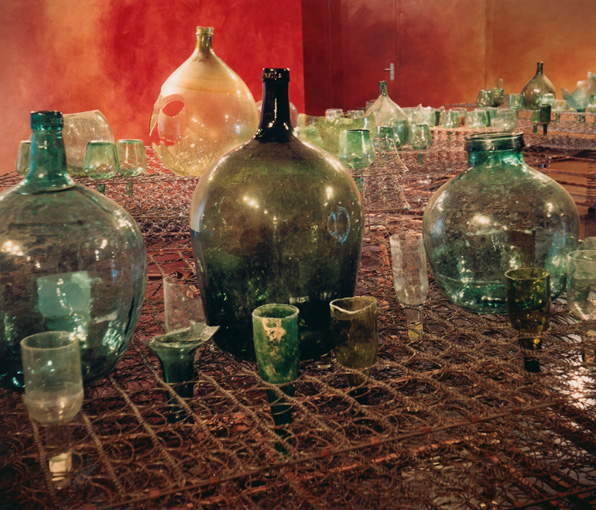
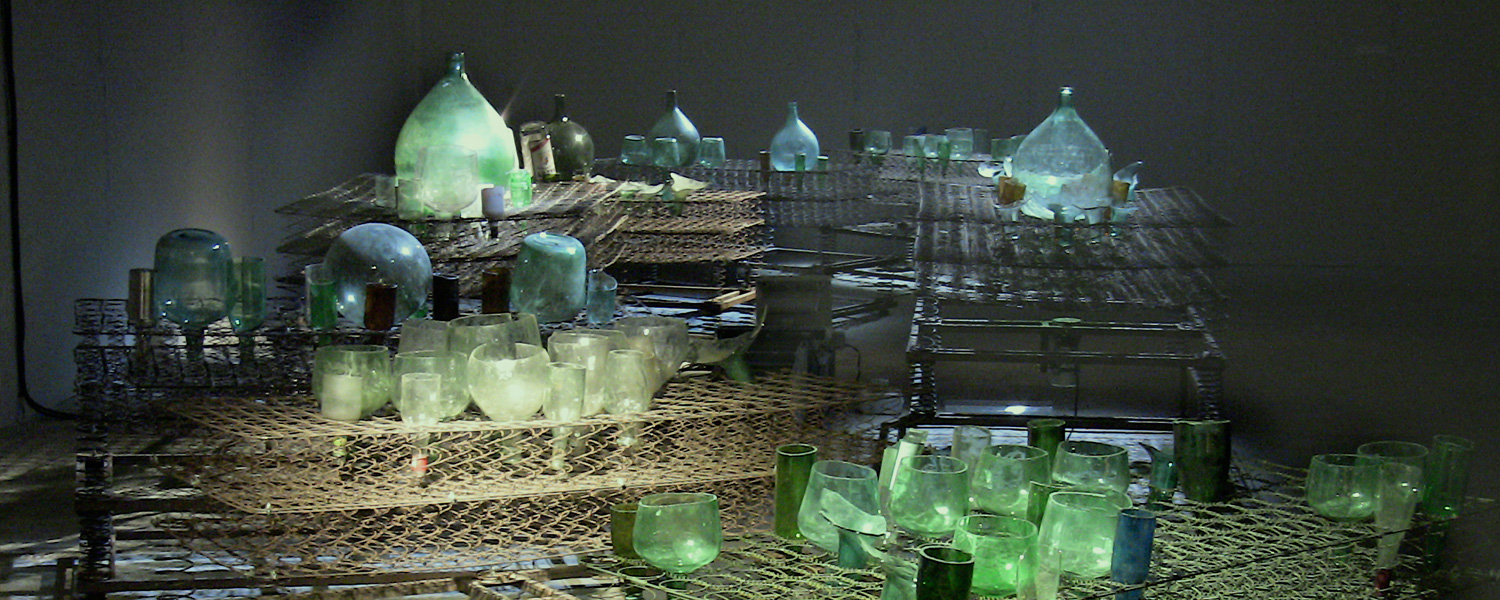
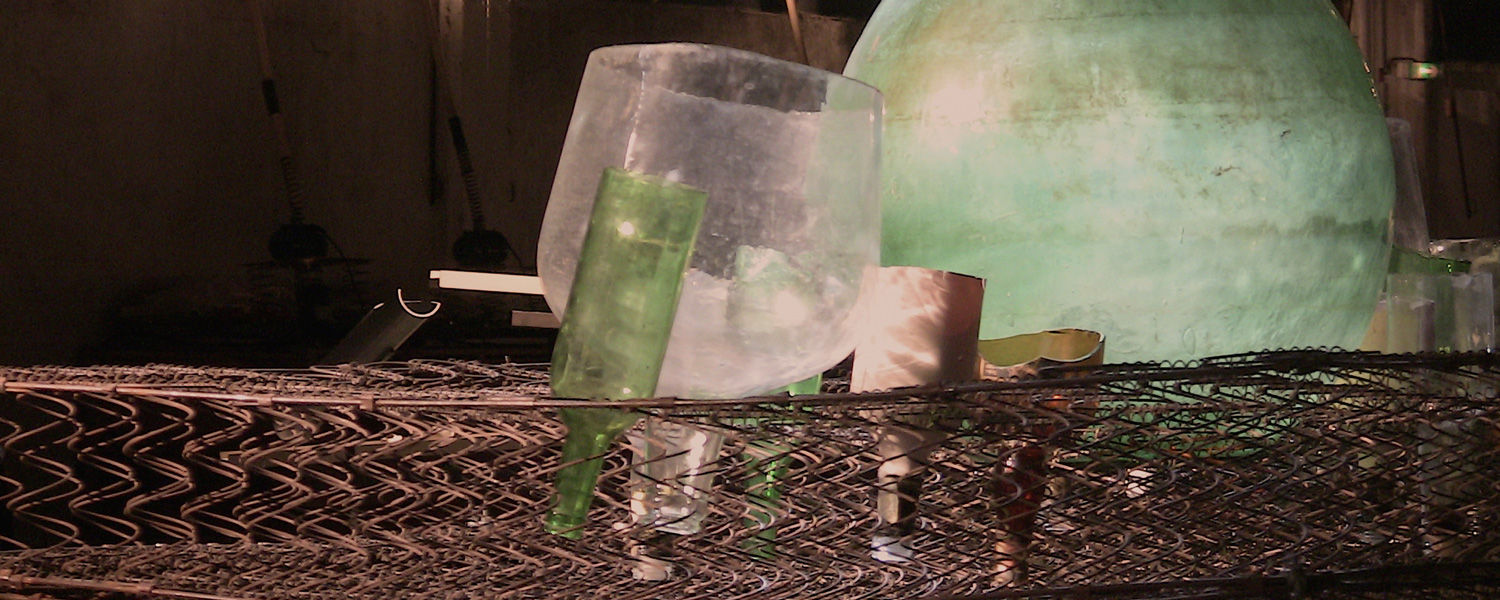
Cantan un Huevo consists of from nine of up to fifteen independent vibration units, each with a behaviour as complex as a complete Krachtgever. Hundreds of metal springs, originally tied together to serve as a mattress, form an extremely complex surface when put into movement. A light-weight oscillating motor causes glass bottles, placed on these mattress springs, to rattle against on another. Only glass is heard. The idea for this work developed from the remarkable recordings we made on a ship from Kiel to Oslo.

The imperceptible vibrations from the ship caused the liquor bottles on the shelves in the tax-free shop to rattle, and the effect was quite hallucinatory. The vibration was a lovely long, slow wave which caused sound to swell out of nothing and to fade back in the same way. Over and over again. The first version of Cantan un Huevo consisted of just five shaking tables and was commissioned by the Ives Ensemble, Amsterdam. An airy, subtle celebration of sound, performed by four musicians together with the installation, and premiered at the IJsbreker, Amsterdam, in March 2000. A bigger version with nine shaking tables was premiered at the Tschumi Paviljoen, Groningen, in July 2000. Finally, for an exhibition at Metrònom, Barcelona, in December 2001, the installation was expanded to a total of fifteen shaking tables. The sonic output was greatly increased in terms of complexity and dynamics, varying from subtle almost-silence to massive clouds of high frequencies. In 2002 Cantan un Huevo received a mention (second prize) at the International Competition for Electroacoustic music and Sonic Art, Bourges, France, in the category of “installations”.

KGV

kgv-aguas

kgv-aguas

Esfuerzo

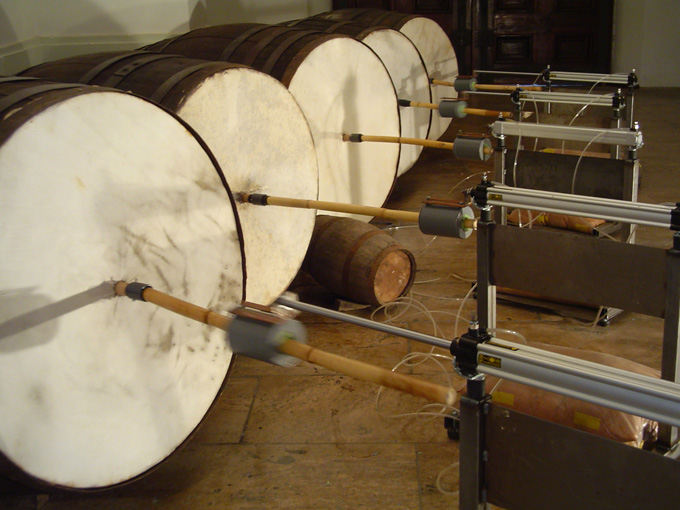
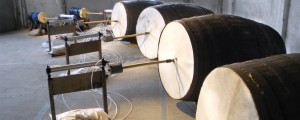
Último Esfuerzo Rural (“Last Rural Effort”) was premiered in Valencia at the Ensems festival of contemporary music, in May 2004. It is composed of two rather different installations. Both produce sounds, big or little, always coarse, sensitive and individual. One part consists of maximum nine giant “zambombas” (lions roars), made of barrels, measuring 1m30 and played by pneumatic cylinders. The other part are hayforks which scratch on metal plates or glass. Both machines have such a peculiar sound world, that its origin cannot be other than the countryside. A feeling which comes out of the deepest inside, like the braying of a donkey. The hayforks make up a small machine with a long-range energy radiation while the barrels, on the contrary, compose a grotesque machine with a relatively small energy radiation (when not amplified). The minimum with the maximum performance, or the maximum with the minimal performance, the result is similar: In this paradox poetry is born.

ultimo-esfuerzo-rural2